
Luxury knitwear combines material quality, knitting techniques, and thoughtful design to create garments with distinctive textures and lasting appeal. Floral patterns, embroidered details, and soft wool-cashmere blends have become important elements in premium autumn and winter collections. However, sourcing high-quality knitwear requires more than evaluating its appearance. Buyers also need to understand yarn characteristics, jacquard construction, surface finishing, and production consistency to ensure that each garment meets their quality expectations. A luxury floral embroidered wool cardigan brings these elements together through delicate botanical patterns and carefully developed knit structures. From selecting fine cashmere fibers to controlling pattern definition, every production stage influences the final garment. Therefore, understanding the manufacturing process helps premium fashion brands make better sourcing decisions and develop knitwear collections with distinctive design characteristics.
Why Material Selection Matters in Premium Jacquard Knitwear
The quality of luxury knitwear begins with its raw materials. Wool and cashmere blends are popular choices because they combine natural warmth, softness, and comfortable wearing properties. However, not all cashmere fibers offer the same performance. Fiber diameter, length, yarn spinning methods, and blending ratios can influence the garment’s surface texture, warmth, and overall durability.
Baby cashmere is particularly valued for its fine fiber structure and exceptional softness. CONCERNI BABY CASHMERE, sourced from the delicate undercoat of Albas baby goats under 12 months old, offers an average fiber diameter of approximately 13–14.5 microns. Each animal produces less than 30 grams of usable fiber annually, making this material relatively rare. In addition, its fiber length of approximately 34–36 mm supports yarn stability and helps create a smooth, lightweight knitted surface.
When developing a cashmere blend cardigan, brands should consider how different fibers work together rather than focusing exclusively on softness. Wool can contribute warmth and structure, while fine cashmere improves the hand feel and wearing comfort. Consequently, selecting an appropriate blend helps manufacturers balance luxury, functionality, and production requirements.
How Jacquard Knitting Creates Refined Floral Patterns
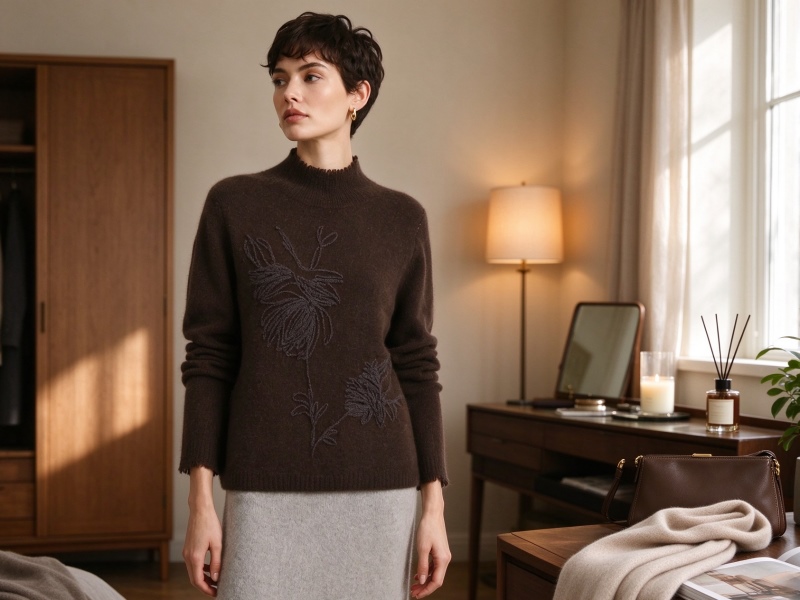
Jacquard knitting allows manufacturers to incorporate decorative patterns directly into the knitted fabric rather than applying all visual details through surface printing. This technique creates more integrated designs with variations in color, texture, and stitch structure. For floral knitwear, tonal botanical motifs can produce a subtle visual effect that complements the garment’s overall silhouette. Moreover, carefully controlled knitting tension helps maintain pattern definition and fabric consistency throughout production.
The production of a luxury floral embroidered wool cardigan requires attention to both pattern development and surface finishing. Fine-gauge knitting technology creates a smooth, refined surface, while tonal jacquard patterns introduce subtle differences in depth and texture. Localized brushed yarn techniques can further enhance the floral details by creating delicate variations in light reflection. As a result, the finished garment achieves a sophisticated appearance without relying on overly bright colors or complicated decorative elements.
Several craftsmanship details influence the final appearance of premium jacquard knitwear:
-
Fine-Gauge Knitting: Produces a smooth and relatively lightweight fabric with a refined surface texture.
-
Tonal Floral Jacquard: Integrates botanical patterns into the knitted structure for a coordinated appearance.
-
Localized Brushed Yarn: Adds soft surface variations and highlights selected decorative areas.
-
Pattern Alignment: Helps maintain visual consistency across the front panels, sleeves, and neckline.
-
Finishing Techniques: Improve the garment’s overall appearance, hand feel, and presentation.
Furthermore, manufacturers should evaluate pattern repeat, stitch density, and yarn tension during sample development. These factors influence whether the floral motifs remain clear and balanced after the garment is assembled.
What Design Details Make Floral Knitwear More Attractive?
Floral knitwear requires a careful balance between decorative elements and everyday wearability. Large, high-contrast patterns can create a bold appearance, while low-contrast botanical motifs offer a more understated aesthetic. For premium collections, tonal floral designs often work particularly well because they add visual depth without overwhelming the garment’s silhouette. This approach also makes the finished cardigan easier to coordinate with different autumn and winter outfits.
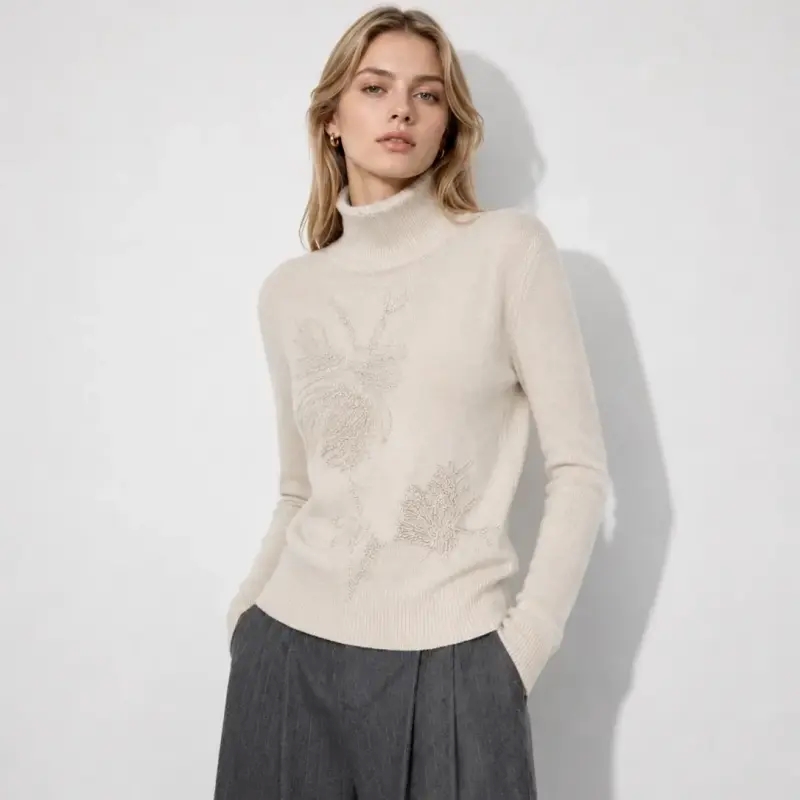
The oatmeal beige color of this design provides a neutral foundation for its botanical jacquard patterns. Meanwhile, the high-neck construction adds warmth and creates a refined neckline that frames the shoulders. Its fitted silhouette follows the natural body shape, while the wool-cashmere blend provides lightweight warmth and a soft touch. Therefore, the combination of neutral colors, subtle patterns, and carefully developed proportions supports a sophisticated seasonal look.
When developing a bulk custom floral embroidered cardigan, brands should consider how decorative patterns interact with garment construction. Floral motifs need to remain visually balanced around buttons, front openings, sleeves, and neckline transitions. In addition, the placement of brushed details should complement the jacquard structure rather than make the fabric appear uneven. These considerations help create a consistent collection with recognizable design characteristics.
How to Evaluate Knitwear Quality Before Placing an Order
Visual appearance alone cannot determine whether a knitted garment meets premium quality expectations. Buyers should examine the yarn composition, fabric consistency, seam construction, pattern definition, and finishing details before approving production samples. In particular, cashmere-rich garments require careful handling because their delicate fibers may respond differently to knitting tension, washing, and finishing processes. Therefore, a structured quality evaluation helps reduce inconsistencies between samples and finished orders.
The following table highlights several important quality considerations when sourcing premium wool and cashmere knitwear.
| Quality Factor | What Buyers Should Check | Expected Benefit |
|---|---|---|
| Fiber quality | Fiber diameter, length, and composition | Softer hand feel and suitable warmth |
| Knitting structure | Stitch consistency and fabric density | Better appearance and construction stability |
| Jacquard pattern | Motif clarity and alignment | More refined visual presentation |
| Surface finishing | Brushed details and yarn consistency | Improved texture and design definition |
| Garment construction | Seams, neckline, cuffs, and hem | Better shape retention and wearing comfort |
| Size grading | Measurements across different sizes | More consistent fit across the collection |
Additionally, buyers should request samples before confirming larger production quantities. Testing the garment after washing can help identify changes in dimensions, surface texture, and pattern appearance. For brands developing plus-size collections, fit evaluation is equally important because larger garment dimensions may require adjustments to pattern placement and knitting structure.
Why Customization Matters for Premium Knitwear Collections
Customization allows fashion brands to develop garments that reflect their target customers and seasonal design direction. A custom cashmere sweater for women may require adjustments to yarn composition, neckline shape, garment length, color selection, and overall fit. Similarly, floral knitwear can be adapted through different botanical motifs, jacquard layouts, and surface treatments. By coordinating these elements during product development, brands can create distinctive collections rather than relying entirely on standard designs.
Size inclusivity is another important consideration. Working with a plus-size knitwear custom supplier can help brands develop more comprehensive size ranges while maintaining consistent design proportions. However, simply enlarging a standard pattern may not produce the best fit. Instead, manufacturers should consider body measurements, shoulder width, sleeve proportions, and fabric behavior when adjusting the garment structure.
Other customization considerations include:
-
Yarn composition and cashmere blending ratios.
-
Floral motif size, placement, and color combinations.
-
Neckline, cuff, hem, and button configurations.
-
Garment measurements and size grading.
-
Knitting gauge and surface finishing techniques.
For brands expanding their autumn and winter collections, these options provide greater flexibility in product development. Moreover, consistent communication between designers and manufacturers helps ensure that the approved sample accurately represents the intended production specifications.
How to Select a Reliable Knitwear Manufacturing Partner
Choosing a suitable manufacturing partner involves evaluating technical capabilities as well as production experience. Buyers should understand whether a factory can handle fine-gauge knitting, complex jacquard patterns, delicate cashmere yarns, and specialized surface finishing. In addition, sample development procedures and quality inspection standards can provide useful insights into manufacturing consistency. A reliable production partner should also communicate clearly about material availability, development timelines, and customization requirements.
YSYS focuses on premium knitwear development, combining carefully selected yarn materials with refined knitting craftsmanship. Its product range includes wool and cashmere blend garments featuring botanical jacquard patterns, delicate textures, and contemporary silhouettes. For example, this floral high-neck cardigan demonstrates how fine-gauge knitting, tonal patterns, and localized brushed yarn techniques can work together to create a distinctive seasonal design. Brands interested in expanding their collections can also explore complementary styles, such as a women’s cashmere turtleneck sweater. By maintaining consistent material standards and coordinating design details across different products, fashion businesses can develop more cohesive autumn and winter collections. Ultimately, evaluating both manufacturing capabilities and product quality helps buyers establish more reliable sourcing relationships.
Conclusion
Sourcing high-quality jacquard knitwear requires a thorough understanding of fiber characteristics, knitting techniques, decorative details, and garment construction. A luxury floral embroidered wool cardigan demonstrates how fine cashmere fibers, wool blends, tonal botanical patterns, and specialized finishing techniques can create a refined seasonal garment. By carefully evaluating material quality, pattern consistency, size development, and manufacturing capabilities, premium fashion brands can make more informed sourcing decisions and build distinctive knitwear collections.